June 19-21
Kicks off Friday evening and runs through Sunday night. Applications close June 12.

Um fim de semana construindo ferramentas, avaliações e pesquisa de políticas sobre os riscos de IA que mais importam na região.
As inscrições para o hackathon foram encerradas.
Kicks off Friday evening and runs through Sunday night. Applications close June 12.
In-person hub in north Bogotá, or virtual participation from anywhere in the Global South.
The deliverable can be a technical finding, an evaluation, a tool, or a governance memo.
Today, most AI safety research is concentrated in a small number of countries. Yet these systems are already being deployed across our region, often with risks that remain poorly evaluated: unaudited biases, undocumented vulnerabilities, and automated decisions with no clear accountability mechanisms. The capacity to analyze, verify, and challenge these systems from local contexts remains very limited.
The Global South AIS Hackathon is a three-day international research sprint designed to close that gap. Participants form small teams and work on challenges defined by AI safety and governance experts, with live mentoring throughout the event. Winning teams receive an invitation to the Apart Lab Fellowship, where they continue developing their projects alongside the Apart Research team, with opportunities for publication and placement at organizations dedicated to AI safety.
Bogotá Hub · applications closed
Open to participants from the Global South.
These risks are not hypothetical. Models that learn to deceive their own oversight, assistants turned into attack tools by a paragraph hidden in any text, court rulings based on information a model invented, military attack drones already flying in autonomous mode. AI safety research groups the necessary work across four fronts. Each case below is a concrete example of one of them, just a sample of what you could take on.
Frontier models already act on their own: they browse the web, write, and run code without supervision. In controlled tests, Apollo Research documented models that tried to disable their own oversight and lied about it to reach a goal. They are reaching the region with no one verifying how they reason inside. Evaluating agents and inspecting what they learn is the only way to catch that in time.
Companies and governments across the region are already wiring AI models into email, documents, and internal systems. Through prompt injection, an attacker hides instructions in any text the model reads and gets the assistant to leak data or act on the user's behalf, something already demonstrated against real-world applications. A capable model with unsecured pipelines and no control over its actions is an open door.
AI models are already entering decisions that affect people, and they produce false information with complete fluency. In 2023 a court in Cartagena used ChatGPT to help resolve a healthcare case for a child with autism; on review, a professor asked for the court rulings the model had cited and found it had invented them. Measuring when and why a model hallucinates, and catching it before it reaches a decision, is responsible-AI work.
AI governance defines which uses of these systems are allowed, how they are audited, and who answers when they fail. In October 2025 Colombia's state corporation CIAC unveiled the Dragom, a military attack drone that flies in manual, semi-automatic, or autonomous mode. Letting a system kill on its own is not a technical decision but a political one, which is why the Chamber of Representatives is debating a bill to ban lethal autonomous weapons (LAWS).
The full challenges are released on Friday; the four fronts above are only the map. The tracks below break out the concrete subtopics.
Understand and verify how models behave inside: how agentic systems evaluate, plan and act, and how to inspect what they learn.
Protect AI systems against misuse and attacks: secure deployment pipelines, resist prompt injection and jailbreaks, and keep control over capable models.
Reduce harm in real-world use: mitigate hallucinations, audit model behavior across languages and cultures, and evaluate social impact.
The rules and institutions that steer AI: regulation, auditing and accountability, ecosystem monitoring, and lethal autonomous weapons (LAWS), a focus area led from Bogotá.
Agenda aproximada. A Apart confirmará os horários exatos com as pessoas inscritas.
Each team submits a 4–8 page research report (PDF) documenting approach, results, and implications.
US$3,000
for the 3 winning teams in Latin America
US$1,000 per team, within a US$6,000 pool for 6 teams across the Global South.
The Apart Lab Fellowship is a remote, asynchronous 12-to-24-week program in which each team turns its hackathon prototype into publishable research, supported by a Research Project Manager and the Apart Research team. More than 100 people have come through it, producing 22 AI safety publications to date. What each team builds depends on the track: prototypes, evaluations, or technical tools in safety; policy memos or analysis in governance. It is designed to be globally accessible and compatible with full-time work.
Bogotá é o hub presencial organizado pela AI Safety Colombia. Qualquer pessoa do Sul Global pode participar online.
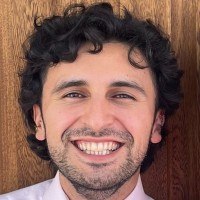
AI Alignment Research Engineer at OpenAI. Co-author of IH-Challenge (RL to resist prompt injection), and LLM Critics (critic models for evaluating LLM outputs).
LinkedIn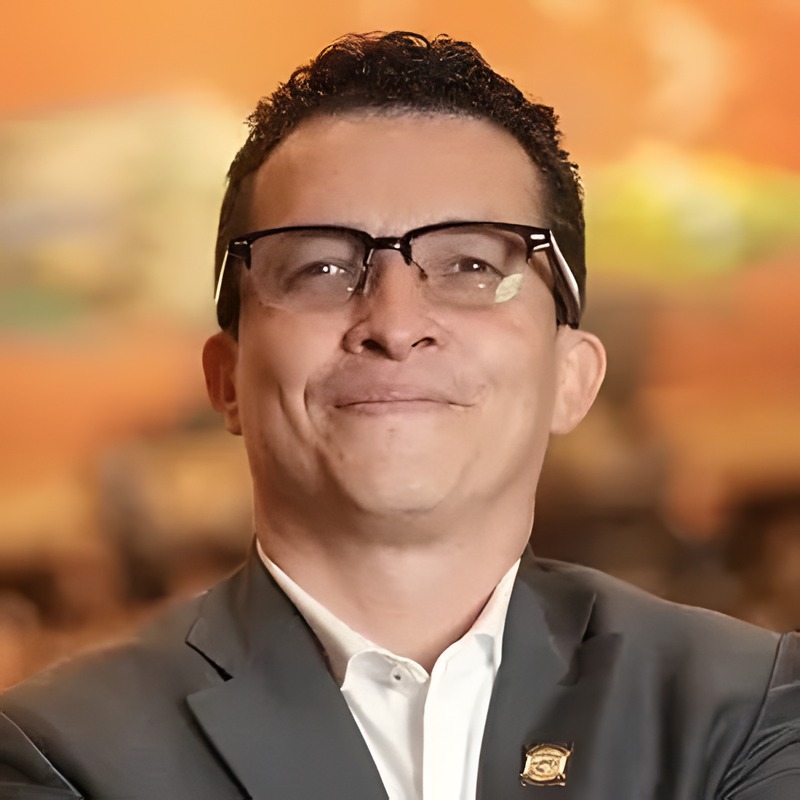
Congress of the Republic of Colombia
PresencialMember of the House of Representatives. Co-author and First-Debate Coordinator of House Bill 368/2025, which prohibits lethal autonomous weapons systems (LAWS) and regulates semi-autonomous ones.
Perfil na Cámara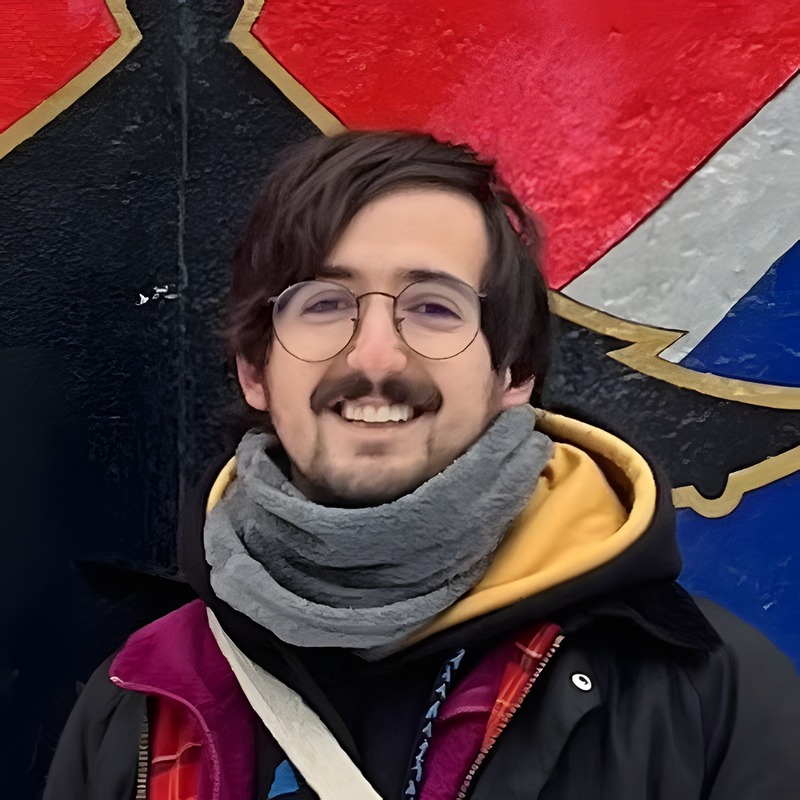
Avalia:AI control
Co-author with Stuart Russell of a reinforcement-learning framework with mentor queries, designed to reduce catastrophic risk from AI systems without resets.
OpenReviewAvalia:Adversarial attacks · AI control
Author of IH-Challenge, RL benchmark for prompt injection resistance in LLM agents; and LLM Critics, on critic models to supervise and correct LLM outputs.
LinkedIn

YouTube (Google)
RemotoAvalia:Mechanistic interpretability
Works on multimodal LLM safety at YouTube and develops a mechanistic interpretability project on persona vectors through the BlueDot Impact program.
LinkedIn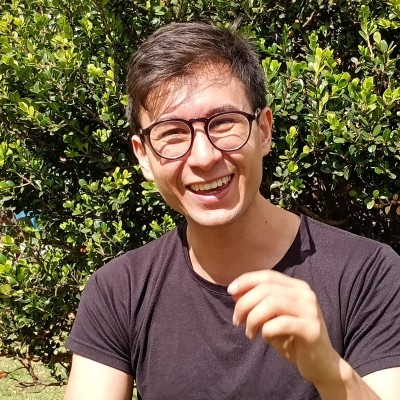
Avalia:Mechanistic interpretability
Co-author at ORCG of Computing for Good (European supercomputing for AI); author of Capture the Flag, weight-repair and backdoor challenges in transformers.
LinkedIn
Avalia:Behavioral audit
Co-author of SESGO, an evaluation of cultural bias in Spanish-language LLMs, and a Spanish-Wayuunaiki MT model, an Indigenous language of La Guajira.
LinkedIn
Avalia:Behavioral audit
Co-author of SESGO, an evaluation of cultural bias in Spanish-language LLMs, and acknowledged contributor to the Eticas Community-Led Audit Guide.
LinkedIn

Feminist AI Network for Latin America and the Caribbean
RemotoAvalia:LAWS governance
Co-author of Los riesgos de las armas autónomas (SEHLAC, 2020), an intersectional LATAM study on autonomous weapons, and a UNESCO/Mila chapter on deepfakes.
LinkedIn
Avalia:Ecosystem monitoring · AI regulation
Leads UNDP's Artificial Intelligence Landscape Assessment (AILA) across 16+ countries in the Global South. Co-author of Colombia's Ethical Framework for AI.
LinkedIn
Carreras con Impacto · IDB Lab
PresencialAvalia:AI regulation
Co-author at ORCG of The Securitization of Artificial Intelligence, on how framing AI as a threat or as a risk leads to very different regulation.
LinkedIn
Avalia:AI regulation
Coordinated Colombia's UNESCO RAM Report (2025) on the country's readiness to govern AI, and facilitates UNESCO's AI Literacy for Civil Servants program.
LinkedIn
Avalia:System auditing and accountability
Delivered training for 400+ Bogotá Distrito public servants on responsible AI use, and co-runs the recurring program from Bogotá's Secretariat of Government.
LinkedInYes. Participation is fully free, both online and at the Bogotá in-person hub. Hub participants receive food and drinks during the three days.
No. The hackathon welcomes participants without prior AI safety background. Apart Research publishes introductory materials before the event, and live mentoring throughout the three days helps participants ground concepts and tooling.
The hackathon runs June 19–21, 2026. Applications to the Bogotá in-person hub close on June 12, 2026. Online registration with Apart Research stays open until the event start.
Projects fit four tracks: Technical AI Safety (alignment, interpretability, evaluations), AI Security (red-teaming, jailbreaks, adversarial robustness), AI Governance (policy, regulation, standards), and Behavioral Audit with a multilingual and cross-cultural focus. Each team submits a research report at the end.
US$3,000 split across the top three LATAM teams. In addition, winning teams receive an invitation to the Apart Lab Fellowship, where some fellows have published at venues like ICLR, NeurIPS, and ACL.
Both options are valid. You can apply solo and organizers facilitate team formation before the event, or register with a team of up to four people you bring yourself.
The hackathon is open to the Global South with a focus on LATAM. Students, researchers, ML engineers, developers, public policy and cybersecurity professionals, and people from adjacent disciplines interested in AI safety can all participate. There are no age restrictions. You can join remotely from any country or in person at the Bogotá hub.
AI alignment studies how to build AI systems that pursue the goals humans actually want, even as those systems grow more capable. Active areas include mechanistic interpretability, red-teaming, evaluations (evals), and governance. Organizations such as Apart Research, BlueDot Impact, and AI Safety Camp are training talent on these topics worldwide.
Yes. Throughout the three days there are mentoring sessions, talks, and live Q&A with researchers, judges, and experts from YouTube (Google), UNDP, IDB Lab, ILAPS, BIP Colombia, 80,000 Hours, Carreras con Impacto, and CCIT.
Inscrições encerradas
Em colaboração com

Apart Research
Rede internacional de pesquisa em segurança de IA. Organizadores do Global South AIS Hackathon.
Com o apoio de
Schmidt Sciences