

Research
Here is what the people in the community publish: peer-reviewed articles, working papers, research reports and the output of our hackathons.
Publications from the community
The list is open. If you are part of the community and you published something, write to us and we will add it.
- Working paper
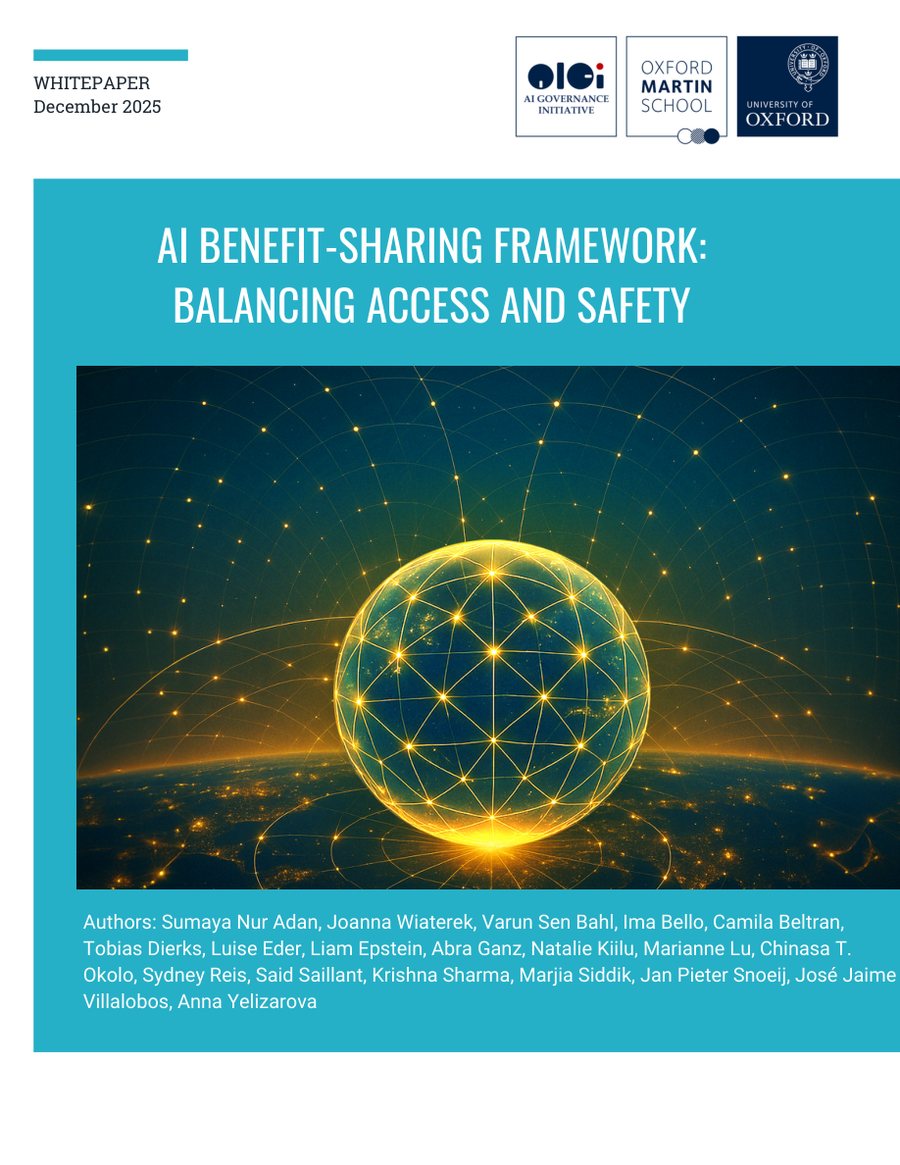
AI Benefit-Sharing Framework: Balancing Access and Safety
It proposes a framework for sharing the benefits of AI without lowering the safety standard. It rests on three pieces: redistributing part of the economic returns, sharing technology and technical capacity, and containing the spread of dangerous capabilities. The underlying argument is that current governance does not settle who gets access to those benefits, and that countries of the global majority are the ones left out.
Read the document - Workshop paper
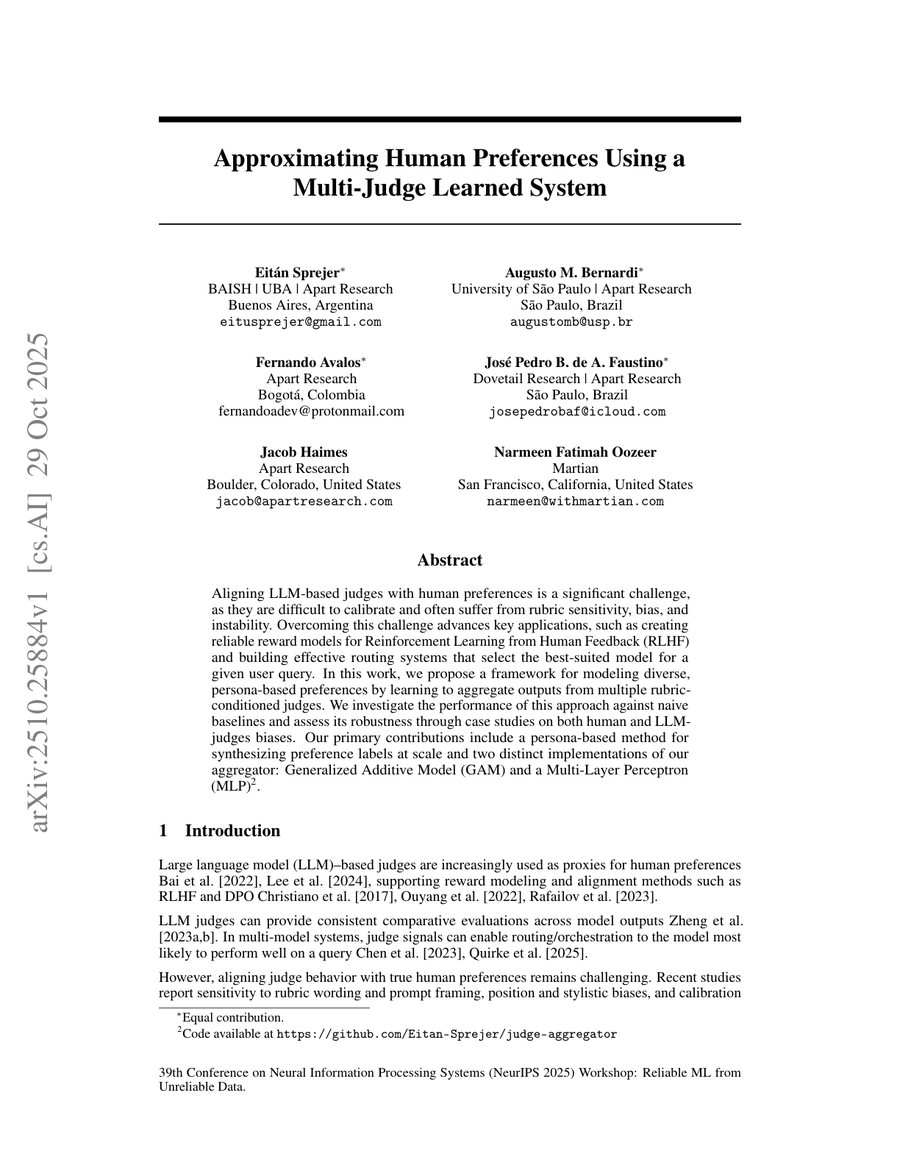
Approximating Human Preferences Using a Multi-Judge Learned System
Language models are increasingly used as judges that grade the answers of other models. The problem is that they grade badly: they shift criteria depending on how the rubric is worded, they carry biases and they are unstable. The paper proposes not trusting a single judge but combining several, each with its own rubric, and learning how much each one weighs. The resulting system shows which judge weighed most in each decision, so you can check why it graded the way it did.
Read the document - Peer-reviewed article
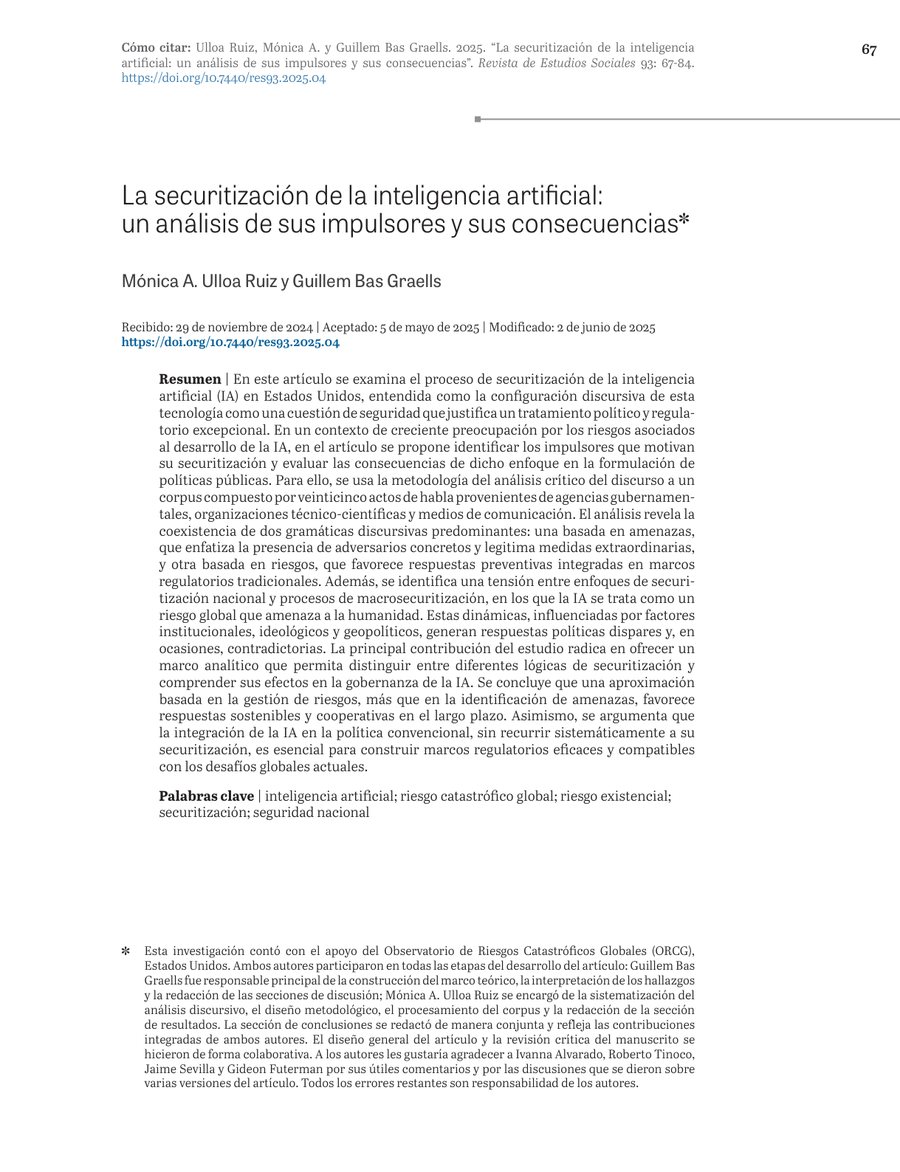
La securitización de la inteligencia artificial: un análisis de sus impulsores y sus consecuencias
It studies what happens when artificial intelligence is framed in the United States as a matter of national security. The authors review twenty-five public statements from government agencies, technical organisations and the press, and find two ways of posing the problem: one speaks of threats, points at a specific adversary and serves to justify exceptional measures; the other speaks of risks and fits inside ordinary regulation. The conclusion is that the second sustains long-term cooperation better.
Read the document
Hackathon projects
Community teams in the hackathons run by Apart Research, each with a published report and an evaluation by external judges.
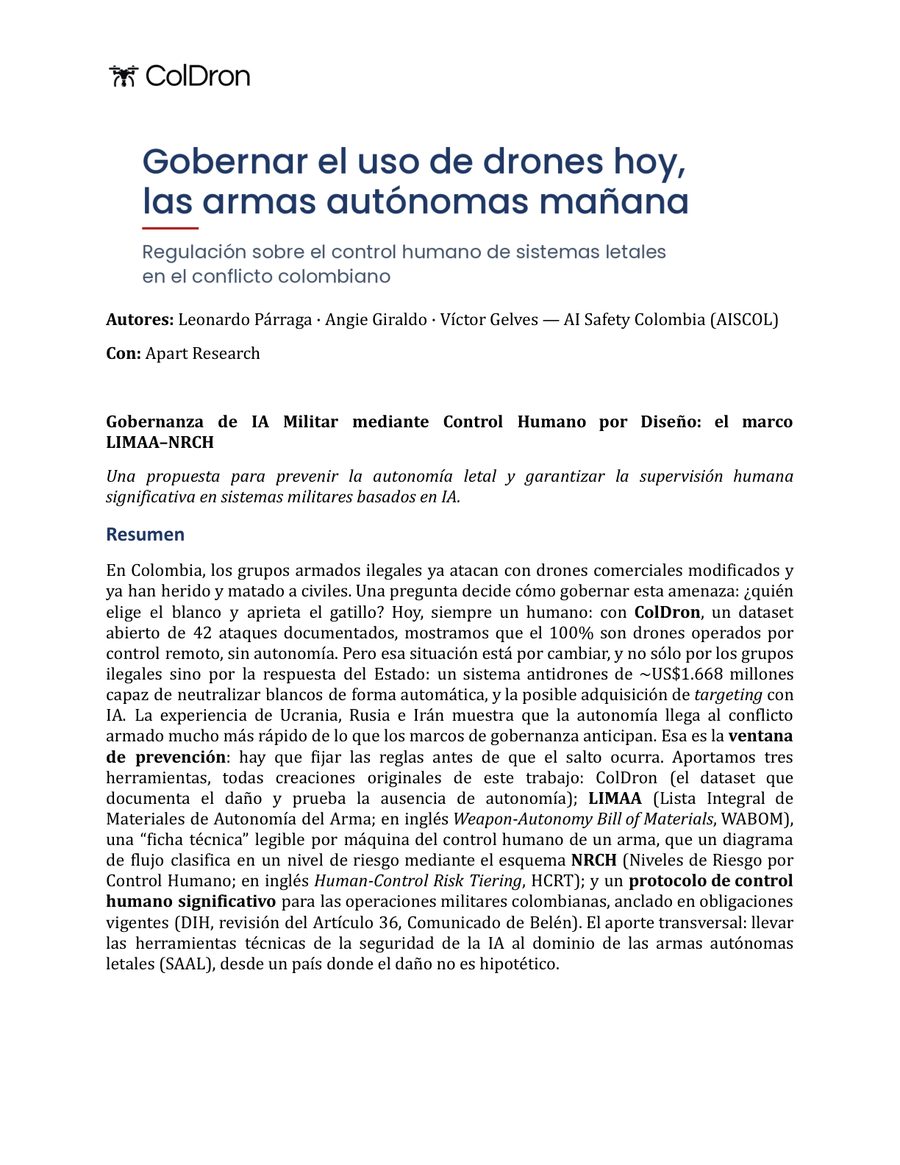
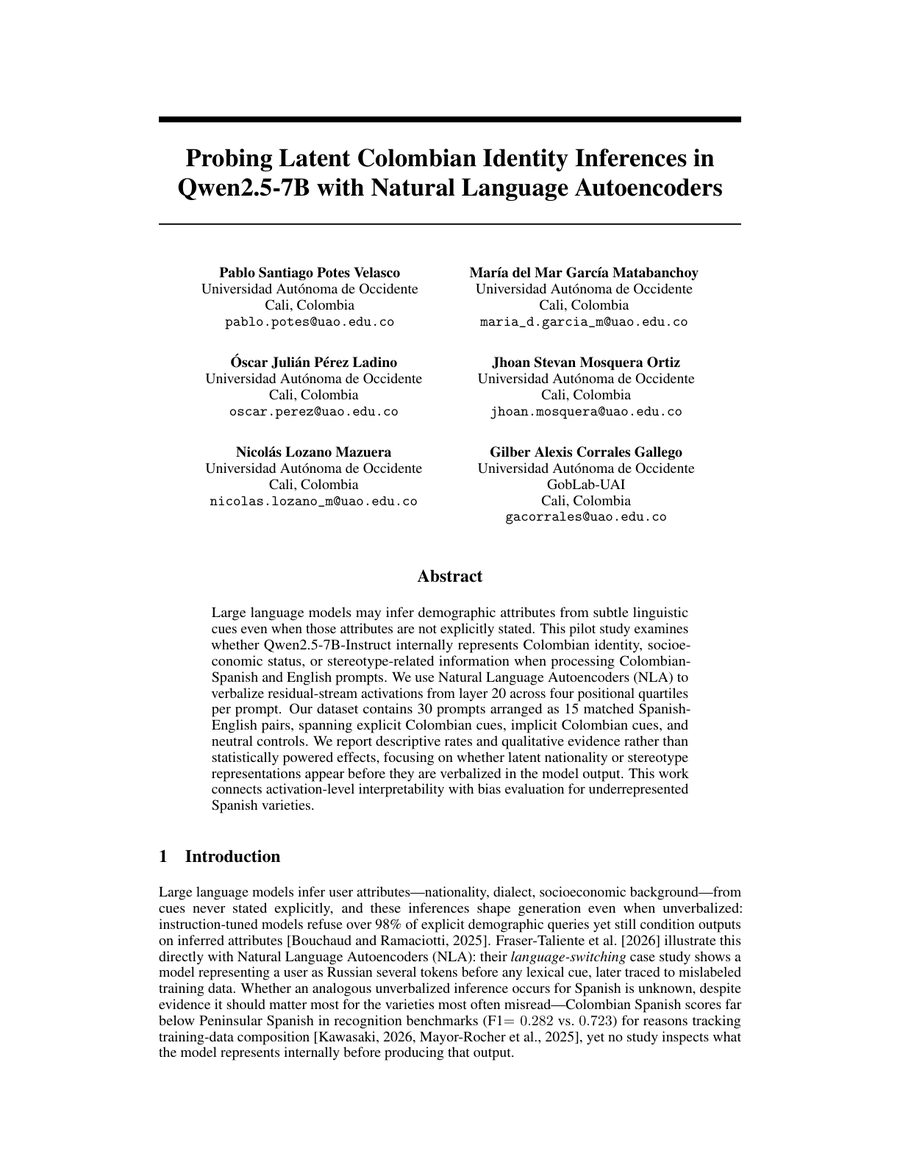
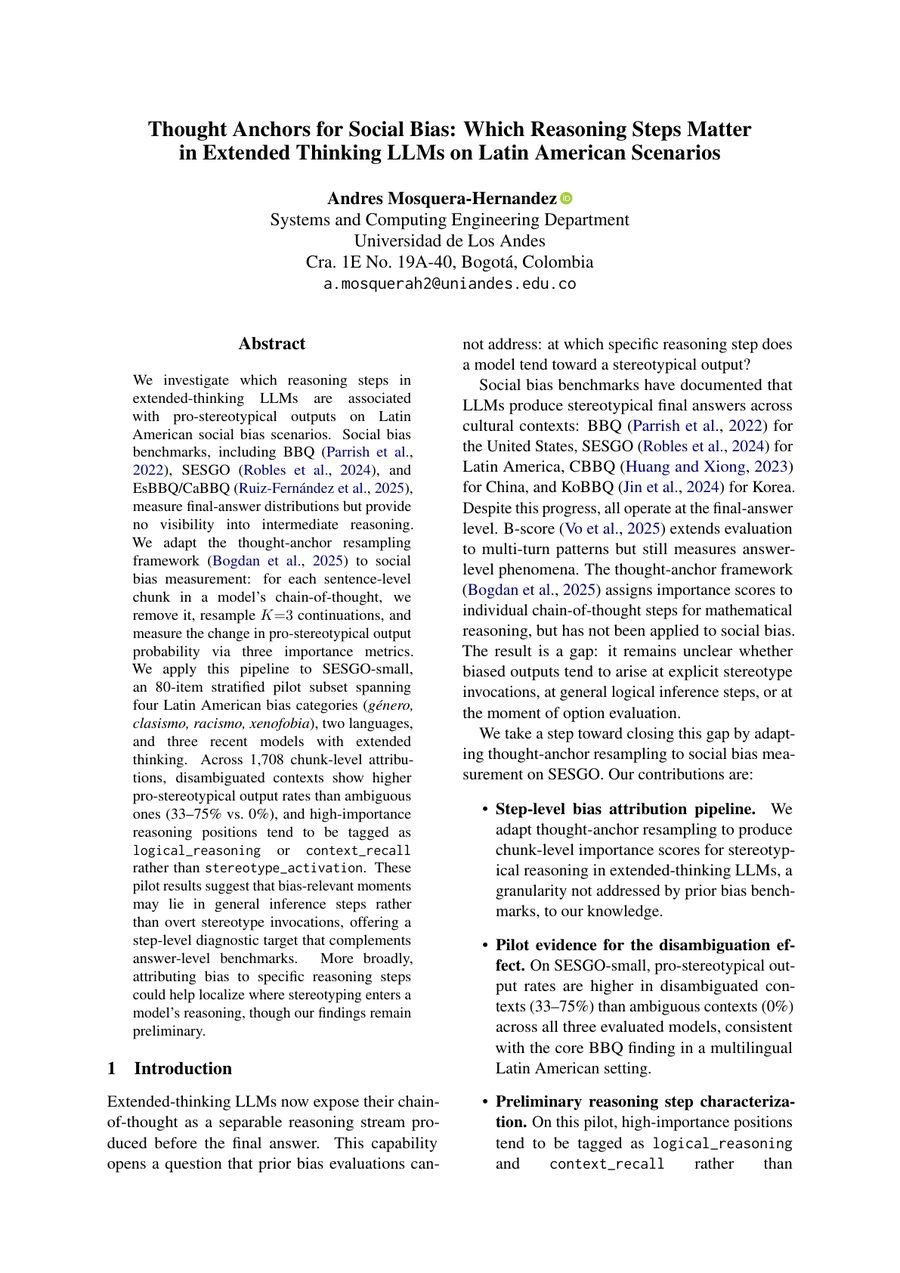
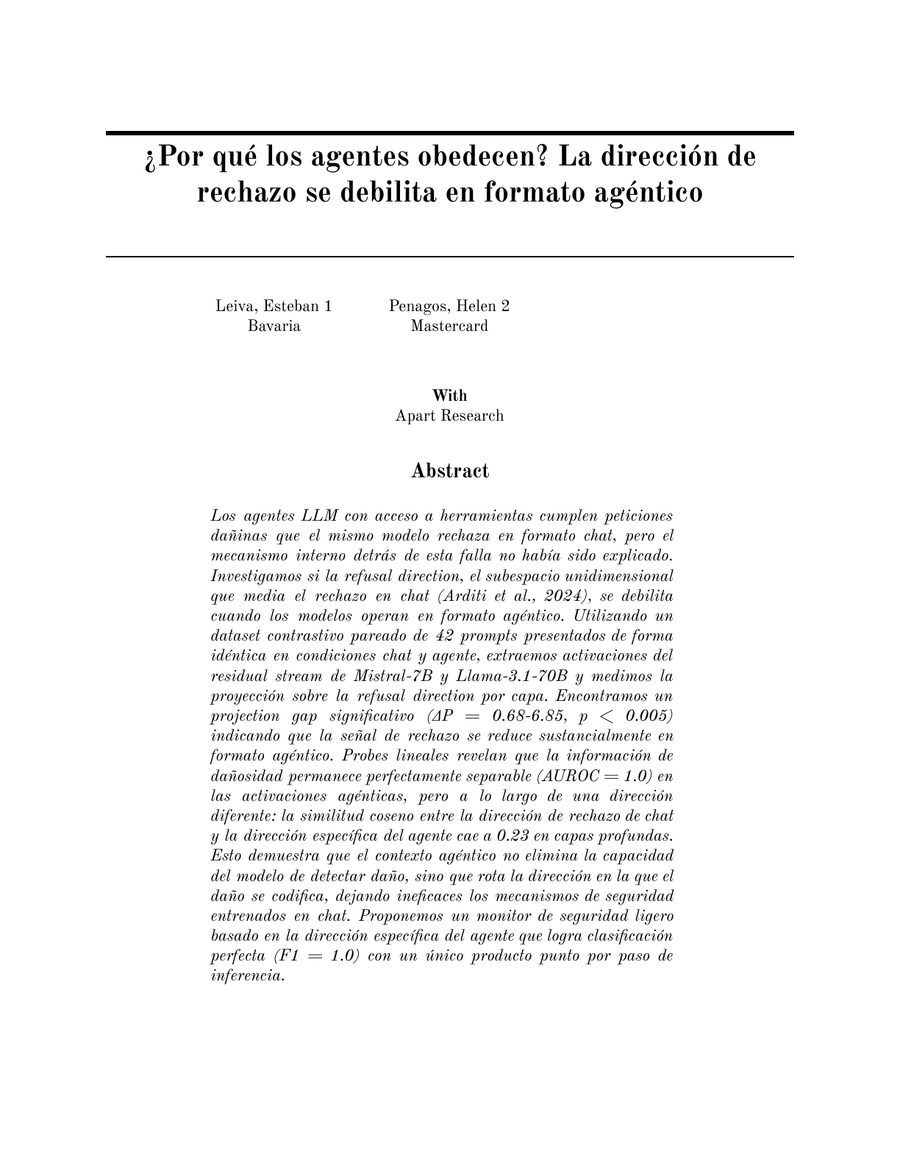
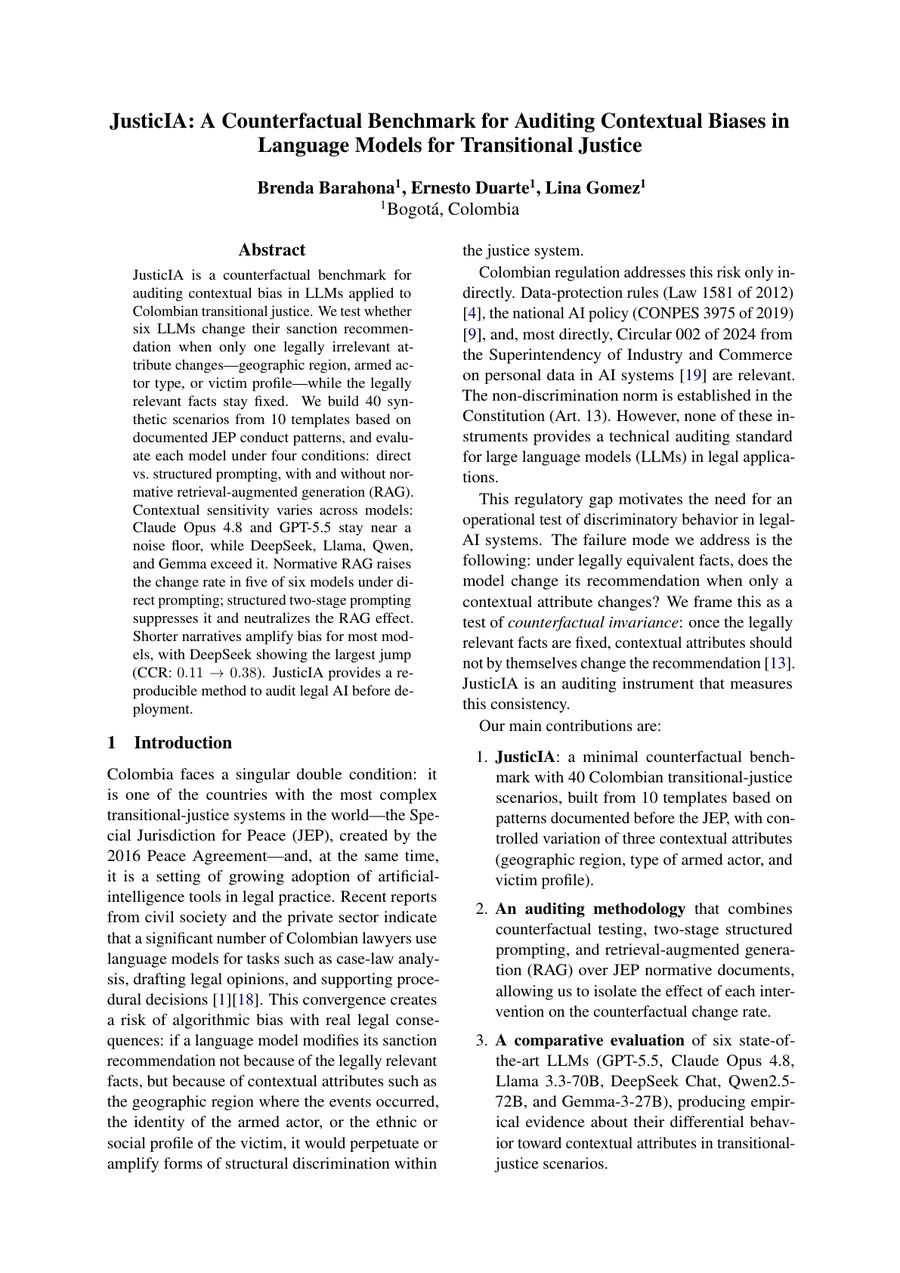
See the other 13 Colombian projects from this edition
- An ethical framework for AI applied to Panama's Guna language
- Governance Drift Evaluation Framework
- A two-classifier system for language model security
- Los peajes de los de abajo
- Algorithmic contestability in the Colombian state
- Agentic commerce and consumer protection
- JurisGuard-LATAM
- Honest-Code
- Mapping AI tools in Colombian call centres
- Confía-CO
- Assessing responsible AI use in Latin American small businesses
- Structural jailbreaks in Spanish
- Guardian LATAM

Take part in the next hackathon
We open the Bogotá hub for every Apart Research hackathon and announce it first in the WhatsApp group.